
Learn how we can help you if you’re a victim of fraud — or read tips on how to avoid becoming one. You can act now while you work toward recovery.


Preventing
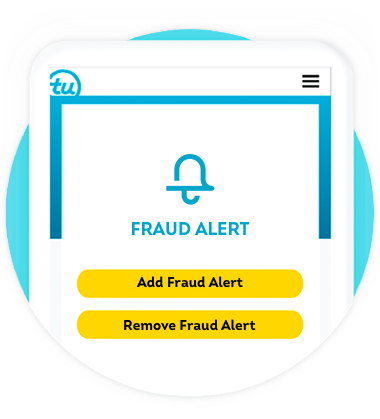
If you think you may become a victim of fraud but there has been no reported misuse of your credit or no confirmed misuse of your personal information, you can place a Potential Fraud Alert on your credit file. If, for example, you've lost a purse or wallet, placing a Potential Fraud Alert will tell potential lenders you may be a victim of fraud and provide them with your contact phone number.
There are three ways you can add a Potential Fraud Alert to your credit file:
- Online: Click Here to visit our self-service website. Our online Fraud Alert service is free.
- Over the telephone: call 1-800-663-9980
- In writing: Click Here.
Here are some simple ways you can help reduce your chances of becoming a fraud victim:
- Monitor your TransUnion Credit Report regularly for unauthorized activity by using TransUnion Interactive, Inc.’s Credit Monitoring solution. If you find any information not pertaining to you, contact the creditor and question the account and/or inquiry.
- Do not carry your extra credit cards, birth certificate, SIN card or passport in your wallet or purse except when necessary. This practice minimizes the amount of information a thief can steal in the case of a lost wallet/purse.
- Install a lockable mailbox at your residence to reduce mail theft.
- Never discard credit card receipts or other documents containing personal information in a public trash container; use a shredder.
- Never leave your purse or wallet unattended at work or in church, restaurants, health fitness clubs, parties or shopping carts. Never leave your purse or wallet in open view in your car, even when it’s locked.
- Destroy all cheques immediately after you close a chequing account. Destroy or store in a secure place any courtesy cheques your bank or credit card company sends to you.
- If you move, do not have your bank send your new cheques to your home address. Tell the bank you prefer to pick them up.
- Reconcile your cheque and credit card statements promptly. Immediately challenge any purchases you do not recognize.
- Limit the number of credit cards you have and cancel any inactive accounts.
- Never give any credit card, bank or Social Insurance information to anyone by telephone — even if you made the call — unless you can positively verify the call is legitimate.
- Minimize exposure of your credit card numbers. If the numbers are requested for cheque-cashing purposes, ask if the business has alternative options like a cheque-cashing card.
- Safeguard your credit, debit and ATM card receipts. Shred them before discarding.
- Scrutinize your utility and subscription bills to make sure the charges are yours.
- Memorize your passwords and personal identification numbers (PINs) so you do not have to write them down. Be aware of your surroundings to make sure no one is watching you enter your PIN.
- Keep a list of all your credit accounts and bank accounts in a secure place. This makes it easy to quickly call the issuers to inform them about missing or stolen cards. Include account numbers, expiration dates and telephone numbers of customer service and fraud departments.
- Do not discard pre-approved credit offers in your trash or recycling bin without first tearing them into small pieces or cross-cut shredding them. Dumpster divers can use these offers to order credit cards in your name and mail them to their address. Always do the same with other sensitive information like credit card receipts and phone bills.
- Avoid credit repair scams. If you’re tempted to contact a credit repair company for help, use considerable caution. Only inaccurate information may be removed from your credit report; negative information that’s accurate (such as a bankruptcy filing or a defaulted loan) will stay on your credit report as long as governing laws allow. Remember that you can dispute information directly with credit reporting agencies free of charge.
Under Consumer Reporting legislation, if you believe any item on your credit report is inaccurate or incomplete, and you notify us, we will verify the information at no cost to you. We do not accept disputes from third parties unless accompanied by a notarized power of attorney that authorizes a licensed attorney or a family member to represent you, or if the power of attorney is unlimited and irrevocable.
Order your TransUnion Credit Report periodically and check for any unauthorized activity. Should any information not pertaining to you show up on your credit report, contact the creditors and question the account and/or inquiry. If you have questions, contact the other major credit reporting bureaus.
Identifying
If a creditor's fraud department, government agency or law enforcement agency referred you to the Fraud Victim Assistance Department (FVAD), you may already know you’re a fraud victim. As well, you may have experienced a loss of personal information due to a theft or break-in. If you know you did not cause the problem, but credit is affected, you’re the victim of a credit fraud crime and you need to take certain steps to protect your rights.
Be aware of these common warning signs of fraud:
One of your creditors informs you they have received an application for credit with your name and Social Insurance Number.
You receive calls or letters stating you’ve been approved or denied by a creditor to which you never applied.
You receive credit card, utility or telephone statements in your name and address for which you never applied.
You no longer receive your credit card statements or you noticenot all of your mail is being delivered to you.
Your credit card statement includes purchases you don't recognize.
A collection agency tells you it’s collecting for a defaulted account established with your identity, but you never opened the account.
Restoring (7 steps)
Once you realize you’re a fraud victim, you need to contact various government, credit/financial institutions and credit agencies. To make the process as manageable as possible, we’ve prepared the following procedures to help you resolve any problems with your creditors, amend fraud information on your credit report and help prevent any further fraud.
1. Obtain and review a copy of your credit report.
Review your TransUnion credit file for any unauthorized activity. If you find any information not pertaining to you on your credit file, contact the creditors and question the account and/or inquiry. If you have questions or want to dispute information on the file, contact TransUnion.
2. Protect your credit report.
Add a fraud alert to your credit file if you have been notified by a creditor's fraud department, government agency or law enforcement regarding fraud to warn potential credit grantors you may be a victim of identity theft. You may also add a fraud alert to your file if you had your wallet lost/stolen or had a home break-in. This statement alerts creditors that obtain your credit file of the fraud and, if applicable, to take additional steps to verify your identity, such as through contacting you before approving credit applications. This statement is retained on your credit file for six years from the date it was added or until you request its deletion in writing.
The addition of a fraud alert to your credit file may assist you in reducing the likelihood of future fraudulent applications resulting in the extension of credit in your name. However, it’s important to recognize, subject to applicable law, credit grantors have the discretion to decide what steps they will take (if any) when they see the fraud alert on your credit file.
3. Report the fraud.
Contact government agencies, such as Service Canada, if someone has used your Social Insurance Number to apply for government services. It’s recommended you also contact your local law enforcement agency to file a report regarding the fraudulent activity. For confirmed cases only, contact The Canadian Anti-Fraud Centre (Phonebusters) to report the incident.
4. Contact your credit financial institutions.
Contact companies you have relationships with and inform them your accounts with those companies may be compromised.
Contact the companies on your credit report you do not recognize. Verify with the company the information it has in its records for the reported item.
Provide the creditor with a copy of your police report; you may need an Affidavit or relevant documentation.
Keep a log of all related phone conversations, including names of people with whom you spoke.
5. Stop cheques and report your Social Insurance Number.
Notify your bank to stop cheques. You can also report stolen cheques to your financial institution and file a complaint with Service Canada.
6. Follow up.
Follow up with companies and agencies you have contacted to ensure their investigation resulted in your favour. The FVAD helps you to the fullest extent possible, but remember you have certain responsibilities. By working with credit grantors directly to identify all fraudulent accounts, you can greatly reduce this crime's effect on you.
7. Regularly review your credit report.
Monitor your TransUnion Credit Report regularly for unauthorized activity by using TransUnion Interactive, Inc.’s Credit Monitoring solution. If you find any information not pertaining to you, contact the creditor and question the account and/or inquiry.
Freezing
A credit freeze (also called a security freeze or a credit lock) prevents access to your credit information for specific credit-related purposes set out in legislation. It’s free to place, suspend or remove — available to consumers in Ontario and Quebec.
Learn how to place, suspend or remove a freeze on our Credit Freeze page.
Contacts
Print this list of phone numbers and keep it for reference during your fraud resolution process.
Correspondence in English:
TransUnion
Fraud Victim Assistance Department
P.O. Box 338, LCD1 Hamilton Ontario L8L 7W2
800-663-9980
Correspondence in French:
TransUnion
Centre de relations aux Consommateurs TransUnion
P.O. Box 338, LCD1 Hamilton Ontario L8L 7W2
877-713-3393
Equifax Credit Information Services
Consumer Fraud Division
P.O. Box 190 Jean Talon
Montreal, PQ
H1S 2Z2
800-465-7166
514-493-2314
Supportive Agencies
The Canadian Anti-Fraud Centre
(PhoneBusters)
P.O. Box 686
North Bay, Ontario
P1B 8J8
888-495-8501
About the Fraud Victim Assistance Department (FVAD)
TransUnion's FVAD is dedicated to helping credit fraud victims. We assist and support all victims of fraudulent activity and put effective pre-emptive and remedial programs into place.
When credit fraud occurs, you and your credit grantors are both victims. Until the fraud is discovered, the fraudulently opened accounts can appear on your credit file. FVAD can help you identify the fraudulent accounts and/or inquiries, advises you of the creditors that need to be informed of the fraud, and works with the creditors to appropriately amend the information reported to your file.
Here are the steps FVAD takes to help prevent further fraud and correct inaccuracies on your credit file resulting from the fraud:
1. After an FVAD representative verifies your identity, the representative advises you of any recent inquiries and/or accounts that are new to your file. If you’re unaware of the inquiry and/or account, the representative provides the phone number for each. Moreover, the representative reminds you to notify the respective creditor of any fraudulent inquiry and/or account.
2. FVAD will add a fraud statement to your credit file, alerting creditors that obtain your credit file of the fraud and, if applicable, to contact you before approving credit applications. This statement is retained on your credit file for six years from the date it was added or until you request its deletion.
The addition of a fraud alert to your credit file may assist you in reducing the likelihood of future fraudulent applications resulting in the extension of credit in your name. However, it’s important to recognize, subject to applicable law, credit grantors have the discretion to decide what steps they will take (if any) when they see the fraud alert on your credit file.
For confirmed Fraud Cases only, FVAD will request your consent to send your name, address and phone number to The Canadian Anti-Fraud Centre (PhoneBusters).
3. Notify joint-victim credit grantors.
Based on our conversation with you, FVAD notifies credit grantors of the suspected fraud inquiry and/or account. Specifically, FVAD advises the credit grantors to check for a recent application or opened account with the victim's identifying information. By approaching the fraud from both the consumer's and credit grantor's perspectives, a significant amount of fraud can be detected and resolved earlier.
4. Mail statement authorization form.
FVAD representative informs you an authorization form will be mailed out in order to obtain written consent and to record your contact information.
5. Keep a database of fraud information.
With your consent, FVAD will add misused information into our High Risk Fraud Alert database. Should this information be used on future fraudulent applications, an alert is generated advising potential credit grantors to do further due diligence prior to extending credit.
6. Restore your credit file to its accurate state.
FVAD investigates any disputed credit information with the creditors to help restore any fraud information on your credit file to its accurate state.
7. Refer you to other credit bureaus.
An FVAD representative advises you to contact other credit bureaus in Canada in order to notify them about the fraud incident and add further protection for yourself.
8. Notification of Investigation Outcome/Mail credit file to the consumer, if appropriate.
An FVAD representative will notify you by mail of the Investigation outcome. If you also want a current copy of your TransUnion Consumer Disclosure, proof of identity and/or residency may be required to safeguard your file from further fraudulent activity. The request must be signed in writing and accompanied by two pieces of acceptable identification. Following is the list of acceptable identification:
Acceptable primary identification
We require one piece of valid, non-expired Canadian Government-issued identification. Examples include:
Drivers license
Canadian passport
Certificate of Indian Status
Birth certificate
Permanent resident card
Citizenship and Immigration form
Old Age Security card
Department of National Defence card
Provincial photo ID
Additional pieces of acceptable identification
Examples include:
Utility bill indicating current address
CNIB card
Social Insurance card
T4 slip (current tax year)Notice of Assessments
GST/HST refunds
Child Tax Benefits (current tax year)
Together these combined pieces must contain your name, current address, date of birth and signature.

Information for Good®.
Connect with us


